The Theme for this Industry Connect session at St Leonards TAFE on 17 Nov 2015 was Design Process. Each of the three speakers were asked to share case studies of the design process on a recent project.
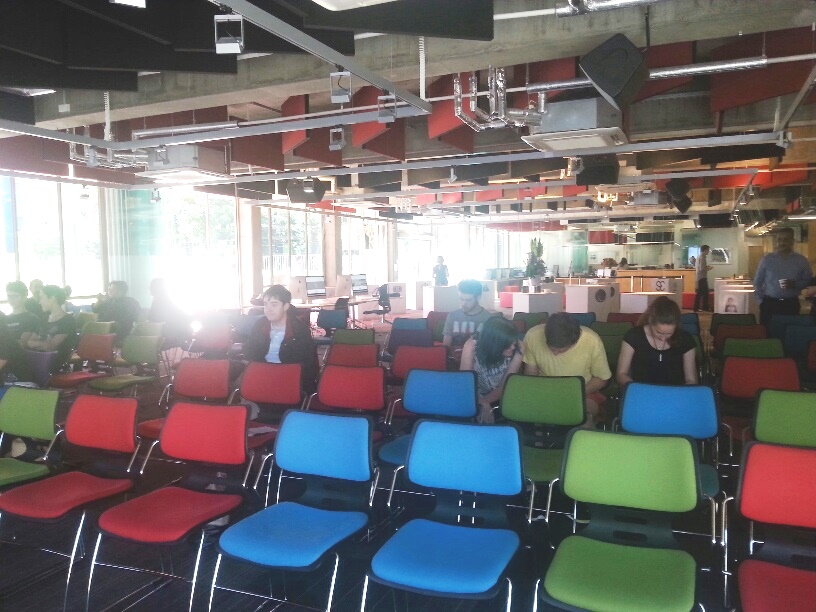
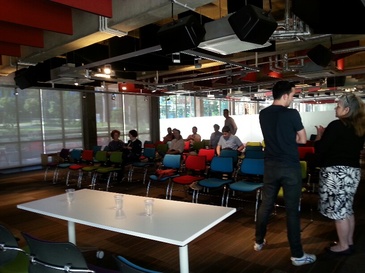
Those that came to Industry Connect had the opportunity to see the graphic design portfolios of the students completing their Bachelor degree. Behind the lecture seating you should be able to see big white plinths. Each student had one of these to display their work on.
Those that came to Industry Connect had the opportunity to see the graphic design portfolios of the students completing their Bachelor degree. Behind the lecture seating you should be able to see big white plinths. Each student had one of these to display their work on.
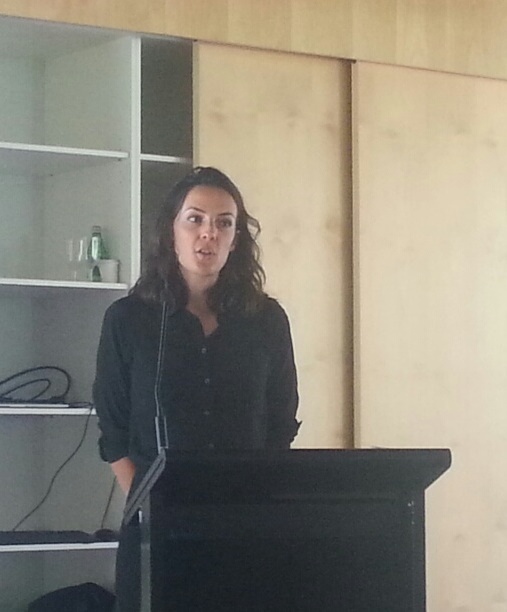
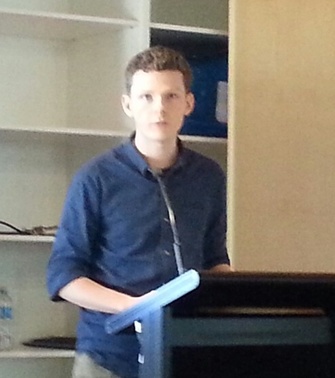
The first speaker was Catherine Van Der Werff. You can find out more about her on LinkedIn, Behance and can follow her on Twitter @CATVDW .
Catherine hails from New Zealand, and studied at the Auckland University of Technology. She has been in Sydney for 7 years and works at RE as a design director specialising in branding.
Catherine hails from New Zealand, and studied at the Auckland University of Technology. She has been in Sydney for 7 years and works at RE as a design director specialising in branding.
For her case study she chose the pitch preparation for the rebranding of the city of Dubai. Many other firms were pitching for the same brief.
Research: You have to become an expert in whatever the brief is about. She shared with us many fun facts about Dubai paired with photographs.
Audit: Find out what others have done with similar briefs and work out who has done the best job and why. The NYC branding for New York City and the stylised M for the City of Melbourne were looked at in detail, and information was gathered on how the City of Dubai is currently branded.
24 hour crit: Which are three 8 hour days devoted solely to generating ideas. It is like a bigger version of the exercise where you divide a page into 8 sections and have to draw a different chair in each one of them – it forces you to find more interesting solutions.
Concept development: Of all these ideas, two or three are chosen for development. The initial concept was Dubai Rising. Through mood boards, sketches and mock-ups many ideas were played with to see what would work. This included thinking about how those designs would look on collateral (buildings, vehicles etc).
Concept refinement: The tagline became Dubai Inspires. Each logo and sub-logo had a motion graphic story and iconic image inspiring it. The project went through at least 20 rounds of changes following feedback.
Realities: All projects have unique challenges. This project was an international one that needed communication between branch offices, head office, the agency managing the pitch bids and the gate-keepers to the ultimate client.
Lessons: Successful City branding requires that the black & white logo is just as recognisable as the coloured one. You have to think just as much about how to sell your concept to your client as developing the concept itself. Research the ultimate decision maker, likes, dislikes and how that person makes decisions. You learn from every job you do, even if it doesn't go into production.
......................................................................................
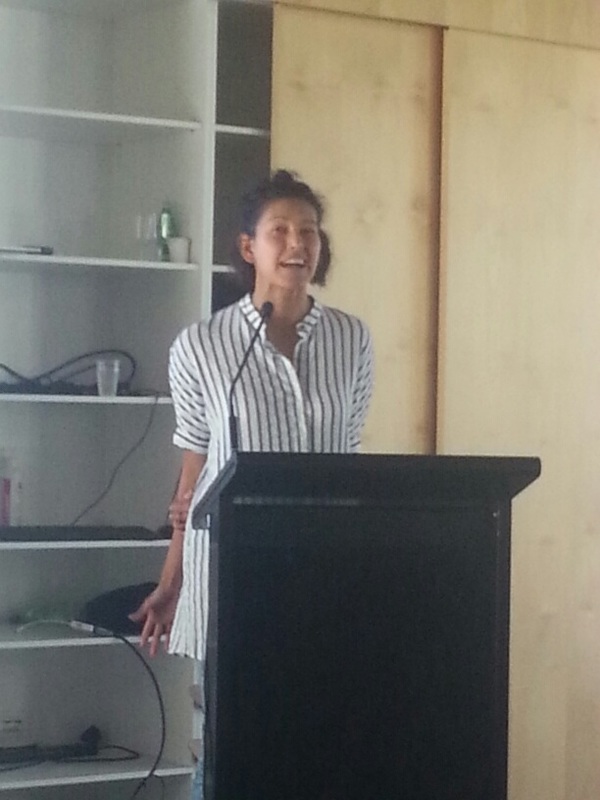
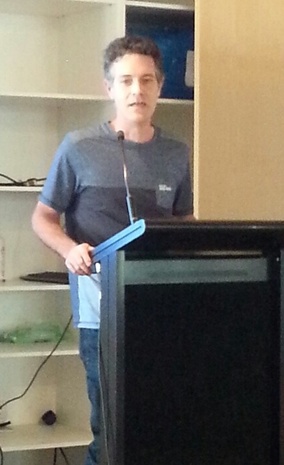
The second speaker was Jo Roca. You can find out more about her at her website http://joroca.com/, on LinkedIn and vis Twitter @Johi .
Jo specialises in creative strategy, ideation and concept development at For The People Agency. She comes from Colombia and has worked internationally. For The People started around a year ago. The agency uploads podcasts of conversations between co-workers and family to document the ups and downs of being a startup agency. The podcasts are called By The People. The agency prefers to find entry level staff through the incubator method; giving them a brief to complete within a week.
Research: You have to become an expert in whatever the brief is about. She shared with us many fun facts about Dubai paired with photographs.
Audit: Find out what others have done with similar briefs and work out who has done the best job and why. The NYC branding for New York City and the stylised M for the City of Melbourne were looked at in detail, and information was gathered on how the City of Dubai is currently branded.
24 hour crit: Which are three 8 hour days devoted solely to generating ideas. It is like a bigger version of the exercise where you divide a page into 8 sections and have to draw a different chair in each one of them – it forces you to find more interesting solutions.
Concept development: Of all these ideas, two or three are chosen for development. The initial concept was Dubai Rising. Through mood boards, sketches and mock-ups many ideas were played with to see what would work. This included thinking about how those designs would look on collateral (buildings, vehicles etc).
Concept refinement: The tagline became Dubai Inspires. Each logo and sub-logo had a motion graphic story and iconic image inspiring it. The project went through at least 20 rounds of changes following feedback.
Realities: All projects have unique challenges. This project was an international one that needed communication between branch offices, head office, the agency managing the pitch bids and the gate-keepers to the ultimate client.
Lessons: Successful City branding requires that the black & white logo is just as recognisable as the coloured one. You have to think just as much about how to sell your concept to your client as developing the concept itself. Research the ultimate decision maker, likes, dislikes and how that person makes decisions. You learn from every job you do, even if it doesn't go into production.
......................................................................................
The second speaker was Jo Roca. You can find out more about her at her website http://joroca.com/, on LinkedIn and vis Twitter @Johi .
Jo specialises in creative strategy, ideation and concept development at For The People Agency. She comes from Colombia and has worked internationally. For The People started around a year ago. The agency uploads podcasts of conversations between co-workers and family to document the ups and downs of being a startup agency. The podcasts are called By The People. The agency prefers to find entry level staff through the incubator method; giving them a brief to complete within a week.
For her case study she chose a pro bono project for the charity Sydney Dog and Cats Home. They find homes for homeless dogs and cats, operating on a shoestring budget, in Spartan conditions, 5 paid staff and 200 volunteers. Most animal residents find homes within 2 weeks. Recently the owner of the premises they use decided to repurpose the land and the organisation needs to find a new home and lots of funds.
Research: To discover what online assets they have now, and how similar organisations (RSPCA) have marketed themselves. Usually the approach has been to evoke pity for the animals.
Idea: To do things differently, and treat animals like celebrities – after all some of the most popular content on the internet contains dogs and cats.
The visit: You can't begin to understand an organisation and its needs until you visit it. Frequently this becomes a reality check. It is a low tech operation with a cost-effective black & white printer.
Engagement: Two ideas were developed for engagement; a logo generator for dog and cat faces, and a magazine called Drool to be funded by Kickstarter and potential sponsorship.
Photography: Getting photos that show the personality of dogs and cats is an art form. You need a good photographer, treats, peanut butter to lick, squeaky toys, belly rubs and at least one volunteer who is familiar to the animals.
Lessons learned: Working with charities is good for the soul, but bad for the weekend. What a designer can dream, a web developer may not be able to do (or do within budget). Any website has to be mobile friendly - as a top priority. Work out how to make the work you have done sustainable for the charity and for the charity's budget.
.....................................................................
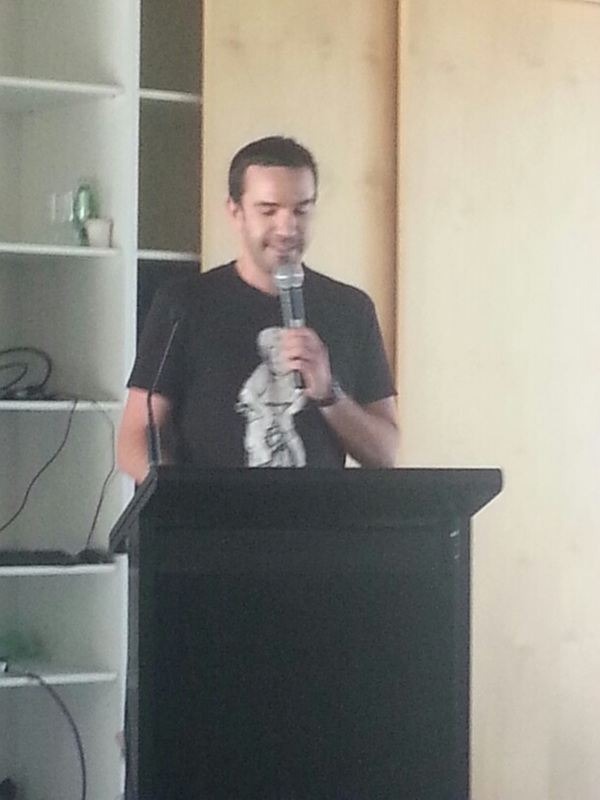
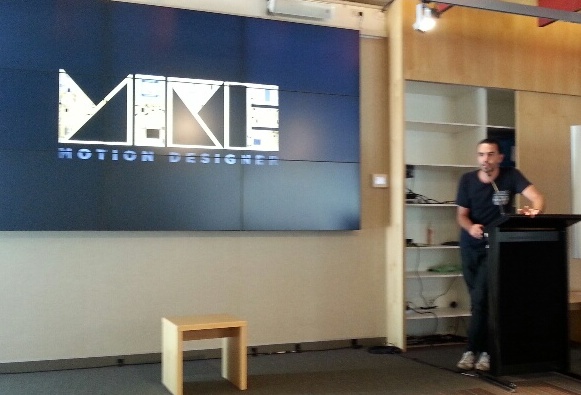
The final speaker was Mike Tosetto, who specialises in Motion design and Promo Animation. He also spoke at the previous Industry Connect on 29 Oct 2015. You can find out more about him and his work on Vimeo, at Behance, on LinkedIn and via Twitter @MikeTosetto .
Research: To discover what online assets they have now, and how similar organisations (RSPCA) have marketed themselves. Usually the approach has been to evoke pity for the animals.
Idea: To do things differently, and treat animals like celebrities – after all some of the most popular content on the internet contains dogs and cats.
The visit: You can't begin to understand an organisation and its needs until you visit it. Frequently this becomes a reality check. It is a low tech operation with a cost-effective black & white printer.
Engagement: Two ideas were developed for engagement; a logo generator for dog and cat faces, and a magazine called Drool to be funded by Kickstarter and potential sponsorship.
Photography: Getting photos that show the personality of dogs and cats is an art form. You need a good photographer, treats, peanut butter to lick, squeaky toys, belly rubs and at least one volunteer who is familiar to the animals.
Lessons learned: Working with charities is good for the soul, but bad for the weekend. What a designer can dream, a web developer may not be able to do (or do within budget). Any website has to be mobile friendly - as a top priority. Work out how to make the work you have done sustainable for the charity and for the charity's budget.
.....................................................................
The final speaker was Mike Tosetto, who specialises in Motion design and Promo Animation. He also spoke at the previous Industry Connect on 29 Oct 2015. You can find out more about him and his work on Vimeo, at Behance, on LinkedIn and via Twitter @MikeTosetto .
For his case study he chose a project for Royal Salut whisky, because it is an example of how free work brings in paid work.
Free work, a.k.a. side projects or personal projects are really important. They are a chance to have fun, to develop skills, to collaborate with others, to have full creative freedom and to have something fresh to add to your reel. You learn more from doing a side project than from doing a tutorial because when you have to solve problems when you come to them you never forget the solutions.
Mike showed us a selection of his side projects: a sequence with a dragon that he collaborated on with an illustrator friend and a music-audio friend; a two-colour grid animation with homage to old arcade games; and an animation about triangles and a pyramid that plays with the AGDA award logo. All of them have been very useful through social media for getting his name and work out into the public square.
The fourth side project he showed us landed him a big design job. Based on his personal interest in whisky and his desire to get better at 3D animation Mike made an info-motion about how whisky gets made.
e wanted it to be elegant, beautiful, subtle and magical. It took research, and problem solving to render the 3D in a special way and to incorporate live action element.
About a year later A+B Studio gave him a call, and said that Royal Salut had loved this side project video so much that they wanted him to do a project for them. They had a new product coming out, with an unusual whisky blending method.
The brand guidelines they sent Mike were over 200 pages long. He further researched the tasting notes and photo styles for the brand. Getting the story board right took about 90 versions, and there was extensive and frequent feedback to incorporate into the project. It sometimes felt like the hours he spent on emails was greater than the hours spent on producing the promo animation.
Lessons learned: With bigger and longer projects the creative director can change and the new person in the role is likely to make changes. Keep effective records of which requests you have and haven't worked on – putting 'DONE' at the end of each completed change request will save a lot of time in the long run. When you are sub-contracting out parts of the project you need to be very sure that you have terms and conditions in place that satisfy everyone's intellectual property requirements.
.................................................................................
To find out when the next Industry Connect is, keep an eye on https://www.facebook.com/designnorth.nsitafe/
Free work, a.k.a. side projects or personal projects are really important. They are a chance to have fun, to develop skills, to collaborate with others, to have full creative freedom and to have something fresh to add to your reel. You learn more from doing a side project than from doing a tutorial because when you have to solve problems when you come to them you never forget the solutions.
Mike showed us a selection of his side projects: a sequence with a dragon that he collaborated on with an illustrator friend and a music-audio friend; a two-colour grid animation with homage to old arcade games; and an animation about triangles and a pyramid that plays with the AGDA award logo. All of them have been very useful through social media for getting his name and work out into the public square.
The fourth side project he showed us landed him a big design job. Based on his personal interest in whisky and his desire to get better at 3D animation Mike made an info-motion about how whisky gets made.
e wanted it to be elegant, beautiful, subtle and magical. It took research, and problem solving to render the 3D in a special way and to incorporate live action element.
About a year later A+B Studio gave him a call, and said that Royal Salut had loved this side project video so much that they wanted him to do a project for them. They had a new product coming out, with an unusual whisky blending method.
The brand guidelines they sent Mike were over 200 pages long. He further researched the tasting notes and photo styles for the brand. Getting the story board right took about 90 versions, and there was extensive and frequent feedback to incorporate into the project. It sometimes felt like the hours he spent on emails was greater than the hours spent on producing the promo animation.
Lessons learned: With bigger and longer projects the creative director can change and the new person in the role is likely to make changes. Keep effective records of which requests you have and haven't worked on – putting 'DONE' at the end of each completed change request will save a lot of time in the long run. When you are sub-contracting out parts of the project you need to be very sure that you have terms and conditions in place that satisfy everyone's intellectual property requirements.
.................................................................................
To find out when the next Industry Connect is, keep an eye on https://www.facebook.com/designnorth.nsitafe/
 RSS Feed
